
The modern B2B buying journey has undergone a monumental shift. Gone are the days when enterprise buyers relied solely on cold outreach, static whitepapers, and scripted sales calls to make purchasing decisions. Today’s B2B buyer is self-directed, tech-savvy, and overwhelmingly wary of generic marketing pitch decks.
In fact, modern enterprise buyers complete over 60% to 70% of their research before ever reaching out to a sales representative. If your brand isn’t meeting them with hyper-relevant, value-driven content across every stage of that journey, you aren’t just losing leads—you’re invisible.
This guide explores how forward-thinking B2B organizations are revamping their content marketing, leveraging intent data, and using intelligent personalization to build high-converting growth engines.
The New Reality of the B2B Buying Committee
Selling in the enterprise landscape is no longer a one-to-one conversation. Modern deals involve complex buying committees comprising anywhere from 6 to 10 stakeholders—spanning IT, Finance, Operations, and C-suite leadership—each bringing distinct priorities and risk tolerances to the table.
+-------------------------------------------------------------------+
|                  THE MODERN B2B BUYING COMMITTEE                   |
+-------------------+---------------------------+-------------------+
|  Role             | Primary Focus             | Key Concern       |
+-------------------+---------------------------+-------------------+
| C-Level / VP      | ROI & Business Impact     | Strategic Alignment|
| IT & Security     | Integration & Compliance  | Data Safety & Risk|
| End-User / Lead   | Usability & Efficiency    | Adoption Friction |
| Procurement       | Pricing & Contract Terms  | TCO & Budget      |
+-------------------+---------------------------+-------------------+
To effectively engage a diverse buying committee, your content strategy cannot rely on a single broad narrative. It must address specific pain points for each stakeholder profile while maintaining a coherent value proposition across every channel.
1. Intent-Driven Content: Moving Beyond Basic Demographics
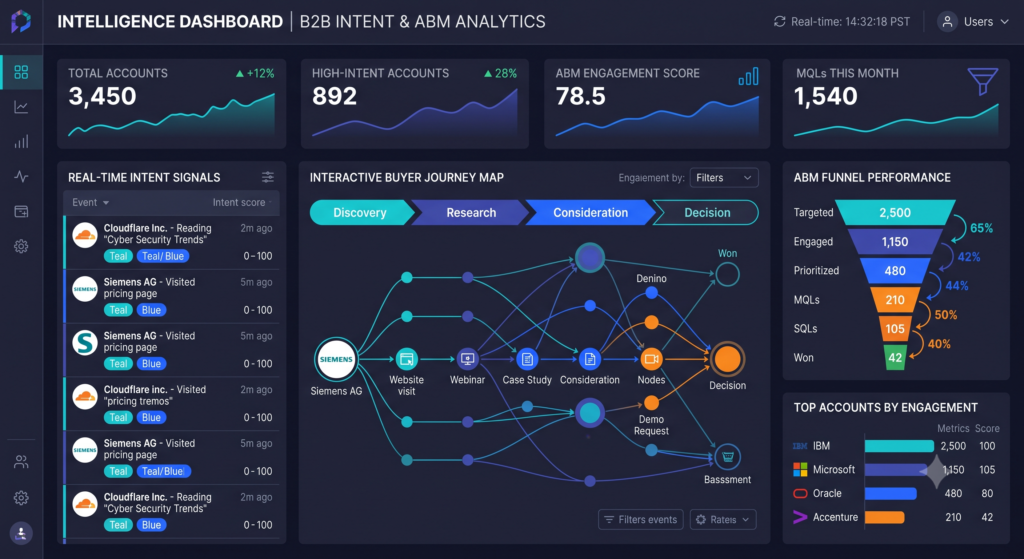
Demographic targeting tells you who your audience is; intent data tells you when they are actively looking to solve a problem. Failing to combine both results in wasted ad spend and low sales efficiency.
Types of B2B Intent Signals
- First-Party Intent: Website visits, repeated whitepaper downloads, pricing page activity, and form fills on your own media properties.
- Third-Party Intent: Research activity across external tech review platforms, content syndication networks, and search engine query trends.
By monitoring intent surges, revenue marketing teams can dynamically adjust their content distribution. When an account shows high third-party intent for “enterprise cloud migration,” automated workflows can deliver targeted case studies and architectural blueprints directly to key decision-makers at that firm.
Key Benefits of Intent Alignment
- Shorter Sales Cycles: Engaging prospects when buying interest peaks.
- Higher Relevance: Replacing generic newsletters with hyper-focused solutions.
- Improved Alignment: Unifying Sales and Marketing under Account-Based Marketing (ABM) frameworks.
2. Crafting High-Impact Assets: From Gated Content to Interactive Value
For years, the gold standard of B2B lead generation was simple: lock a PDF behind a long form and collect contact details. Today, buyers suffer from form fatigue and reluctance to hand over private work emails for mediocre content.
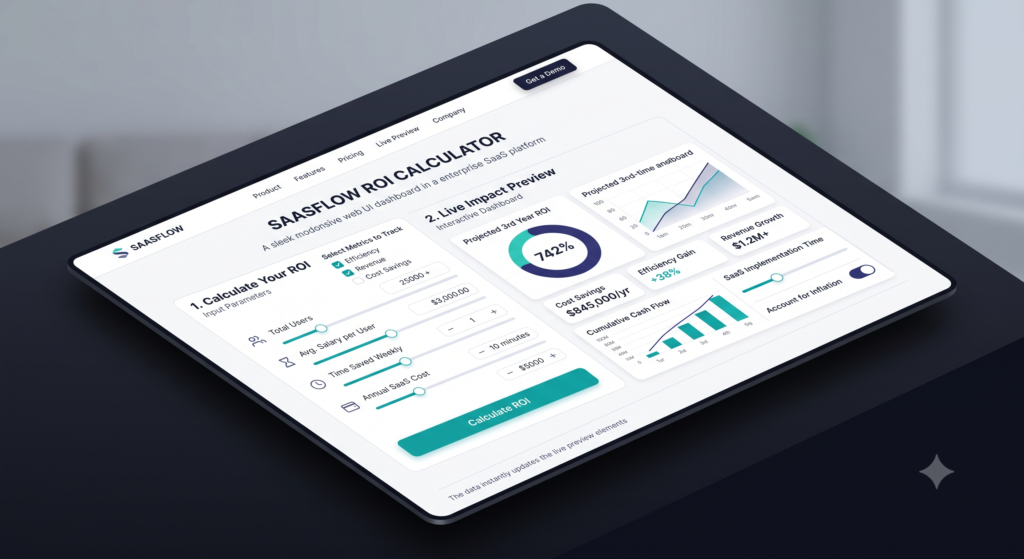
To win in competitive markets, B2B leaders are shifting toward ungated value and interactive experiences.
High-Converting Content Formats
- Interactive ROI Calculators: Allow buyers to plug in their own metrics and estimate potential cost savings or efficiency gains in real time.
- Modular Whitepapers & Summaries: Instead of forcing a 30-page PDF download, offer executive summaries, key takeaways, and digestible landing page abstracts.
- Self-Guided Product Tours: Let prospective buyers explore your product’s UI directly on the website before talking to sales.
- In-Depth Benchmark Reports: Original research and industry statistics position your company as an authoritative market voice.
Pro Tip: If you gate content, keep the form short. Requiring only 2 or 3 fields (e.g., Work Email and Company Size) dramatically increases conversion rates compared to exhaustive 8-field forms.
3. Integrating AI Without Sacrificing Brand Authenticity
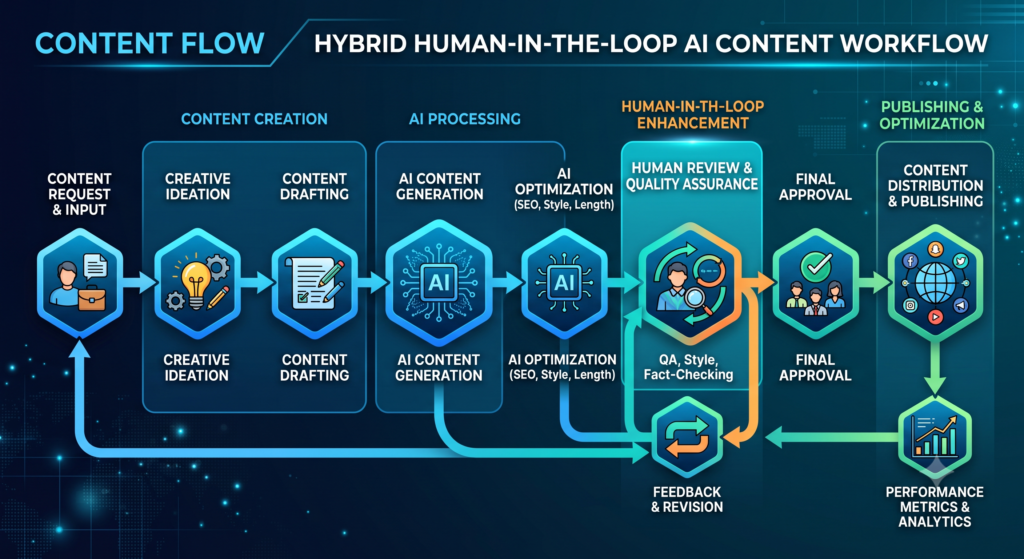
Artificial intelligence has radically simplified content generation, but it has also flooded the web with low-quality, generic text. In B2B, trust is the ultimate currency; generic content degrades brand credibility quickly.
      [ AI Research & Drafting ]
                 │
                 ▼
      [ Subject Matter Expert Review ]
                 │
                 ▼
    [ Tailored Brand & Tone Alignment ]
                 │
                 ▼
    [ High-Converting B2B Publication ]
How to Use AI Effectively in B2B Pipelines
- Data Synthesis: Use AI tools to quickly cluster research data, extract abstracts from long whitepapers, or draft multiple variants of ad copy and headlines.
- SME Integration: Pair AI execution with authentic insights from internal Subject Matter Experts (SMEs). Human perspectives, proprietary data, and real-life case studies cannot be replicated by AI algorithms.
- Personalization at Scale: Utilize dynamic text replacement to tailor landing page headlines, hero banners, and emails based on the visitor’s industry or firmographic data.
4. Landing Page Optimization: Transforming Traffic into Pipeline
Generating targeted traffic is only half the battle. If your enterprise landing pages fail to communicate clear value within 5 seconds, prospective buyers will bounce.
Core Anatomy of a High-Converting B2B Landing Page
- Clear, Benefit-Driven Headline: Focus on the customer’s business outcome rather than internal features.
- Weak: “An End-to-End Enterprise Resource Planning Suite.”
- Strong: “Reduce Operational Costs by 24% with Automated ERP Integration.”
- Social Proof & Client Validation: Display prominent client logos, recognizable industry awards, and short, impactful testimonials from verified leaders.
- Frictionless Lead Capture: Offer multiple ways to engage, including instant booking widgets, dynamic content downloads, or live chat.
- Scannable Content Architecture: Use clear hierarchy, bulleted lists, highlight boxes, and custom graphics to guide the reader’s eye naturally.
5. B2B Attribution and Performance Metrics
If you can’t measure your marketing efforts, you can’t scale them. Modern B2B organizations are moving away from single-touch attribution models toward multi-touch frameworks that map the entire buyer journey.
Key Metrics to Track
- Pipeline Velocity: Measures how quickly leads move from initial touchpoint to closed-won status.$$\text{Pipeline Velocity} = \frac{\text{Active Opportunities} \times \text{Average Deal Size} \times \text{Win Rate}}{\text{Sales Cycle Length (Days)}}$$
- Customer Acquisition Cost (CAC) Payback: The time required for a customer to generate enough gross profit to cover the cost of acquiring them.
- Marketing Qualified Lead (MQL) to Opportunity Conversion Rate: Indicates the true quality of leads generated by marketing programs.
- Content Engagement Rate: Tracks how long prospects consume key resources and how many touchpoints occur before sales contact.
Conclusion & Next Steps
Building a resilient B2B growth engine requires balancing data insights with compelling, high-quality storytelling. By capitalizing on intent signals, producing interactive assets, optimizing landing pages, and enforcing rigorous attribution, marketing teams can deliver predictable revenue growth.
Executive Checklist for B2B Growth
- Audit your top-performing content assets and ungate key resources.
- Integrate first- and third-party intent data into your CRM/MAP.
- Replace generic lead forms with streamlined, low-friction interactions.
- Establish a human-in-the-loop AI workflow for rapid asset scaling.
- Align Sales and Marketing metrics around pipeline velocity and revenue creation.
Would you like to tailor this blog post to a specific B2B industry, such as SaaS, FinTech, or Supply Chain Management?