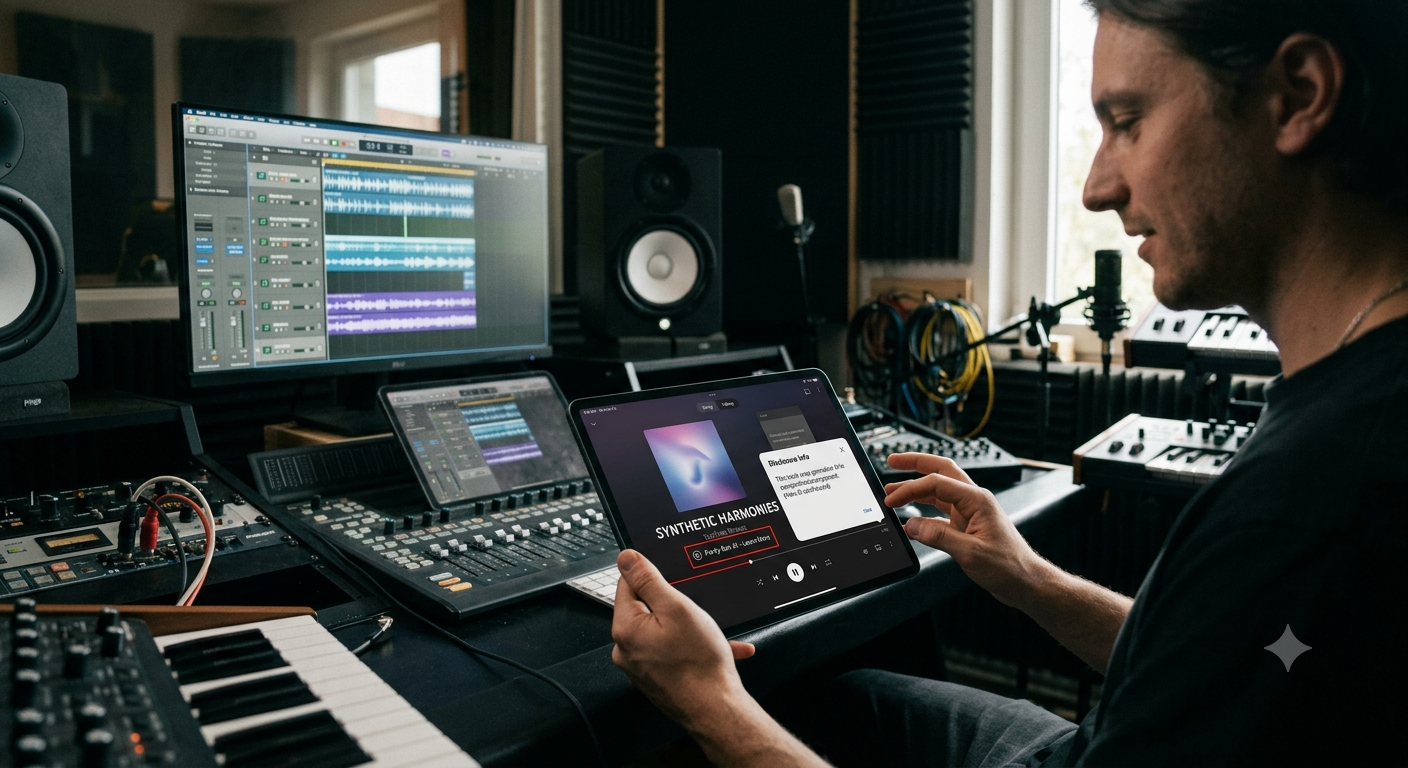
Artificial intelligence is changing how music is created, distributed, and discovered online. As AI-generated songs become more common across streaming services, platforms are looking for ways to help listeners understand whether the music they hear was created by humans, AI tools, or a combination of both.
YouTube Music is taking a step in this direction by introducing new labels that disclose the use of generative AI in music production. Announced on October 14, 2026, the feature is designed to improve transparency while allowing artists to continue experimenting with emerging creative technologies.
How YouTube Music’s New AI Labels Work
The new labels will appear on the music player page, making it easier for listeners to identify tracks created with the assistance of generative AI. Users can select a label to access additional information about how AI contributed to a particular recording.
The feature will also extend to the main YouTube platform, helping provide greater visibility into AI involvement across its music ecosystem.
YouTube says it is working with music industry partners and using its own detection systems to identify AI-generated content. The company also provides a disclosure framework through which participating partners can identify the level of AI involvement in their music.
The framework includes three categories:
- Fully Gen AI: Music created entirely through generative AI.
- Partly Gen AI: Music that combines AI-generated elements with human-created or live contributions.
- No Gen AI: Music that does not fall into the platform’s designated generative AI categories. Conventional production techniques, such as pitch correction, do not automatically qualify a track as AI-generated.
These distinctions could help listeners better understand how a song was produced without assuming that every use of technology makes a recording artificial.
Why Transparency Is Becoming Important
The growth of generative AI has made it easier to produce songs, vocals, and instrumental arrangements at scale. While these tools can support creativity and help independent artists experiment with new sounds, they also introduce challenges for streaming platforms.
Large volumes of automatically generated tracks can make music discovery more difficult. Platforms must also address questions involving attribution, royalty distribution, spam, and the potential misuse of an artist’s voice or musical identity.
Clear labeling offers one way to address these concerns. Rather than relying entirely on restrictions, platforms can provide information that helps listeners make their own decisions about the content they consume.
For artists and music businesses, transparent disclosure may also become an important part of maintaining audience trust.
How Other Music Streaming Services Are Responding
YouTube is not the only platform adapting to the growth of AI-generated music. Streaming services are developing different approaches to disclosure, recommendation systems, and monetization.
Apple Music has announced plans for AI-related transparency labels, while Spotify has introduced measures intended to improve disclosure and address music spam.
Deezer has adopted a more restrictive approach toward detected AI-generated content. The company has reported receiving tens of thousands of fully AI-generated tracks daily and has introduced labeling measures designed to distinguish such recordings from other music. It also excludes detected AI-generated tracks from certain recommendations and editorial playlists.
TIDAL has taken steps to label recordings identified as entirely AI-generated and restrict their participation in certain monetization and royalty processes.
These approaches illustrate an important industry debate: should platforms primarily inform listeners about AI involvement, or should they also limit how AI-generated tracks are recommended and monetized?
YouTube’s labeling strategy emphasizes disclosure rather than automatically penalizing music simply because AI was involved in its creation.
What This Means for Artists and the Music Industry
YouTube’s new labels could influence how musicians, record labels, distributors, and independent creators present their work.
Artists using AI for songwriting assistance, vocals, production, or sound design may need to pay closer attention to disclosure requirements. Music distributors and rights holders could also face greater pressure to provide accurate information about how recordings are created.
For listeners, the labels may offer additional context when discovering unfamiliar artists and tracks. However, their effectiveness will depend on accurate disclosures, reliable detection systems, and clear explanations of what each designation means.
YouTube’s own interest in AI-powered music creation adds another dimension. Its Dream Track experiment allows selected creators to generate soundtracks featuring AI-generated versions of participating artists’ voices, demonstrating how the platform is exploring AI as a creative tool alongside its transparency efforts.
The Future of AI-Generated Music
AI is likely to remain an important part of music production, from assisting with arrangements to generating entirely synthetic recordings. As these capabilities expand, streaming platforms will need to balance creative freedom with transparency, fair compensation, and audience expectations.
YouTube Music’s new labeling system represents a move toward giving listeners more information about the music they stream. Its long-term impact will depend on how consistently the labels are applied and whether users find them useful.