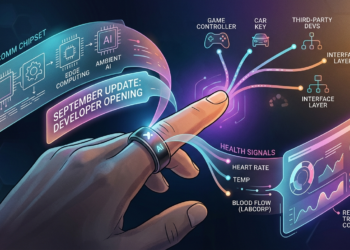
Edge software platforms are becoming increasingly important as organizations deploy intelligent devices closer to where data is generated. Businesses are implementing edge software to process information locally rather than relying entirely on centralized cloud infrastructure, enabling faster decision-making and improved operational efficiency.
Industries including manufacturing, healthcare, logistics, telecommunications, and retail are adopting edge software platforms to support real-time monitoring, predictive maintenance, automation, and connected device management. Local processing reduces latency while allowing mission-critical applications to continue operating even when internet connectivity is limited.
Artificial intelligence is driving much of the innovation in edge software. AI models deployed directly on edge devices can analyze video streams, detect equipment failures, monitor production quality, and optimize industrial operations without transmitting large volumes of data to remote servers. This approach improves response times while reducing network bandwidth requirements.
Software providers continue expanding edge management capabilities through centralized administration tools that simplify application deployment, remote updates, security monitoring, and performance optimization across distributed environments.
Security remains a top priority as edge deployments increase. Organizations are implementing secure boot technologies, encrypted communications, device authentication, and automated patch management to protect distributed computing environments from evolving cyber threats.
Industry experts expect edge software platforms to become an essential component of enterprise IT strategies throughout 2026. Businesses investing in distributed computing architectures are likely to improve operational agility, strengthen system reliability, and unlock new opportunities for intelligent automation across connected environments.