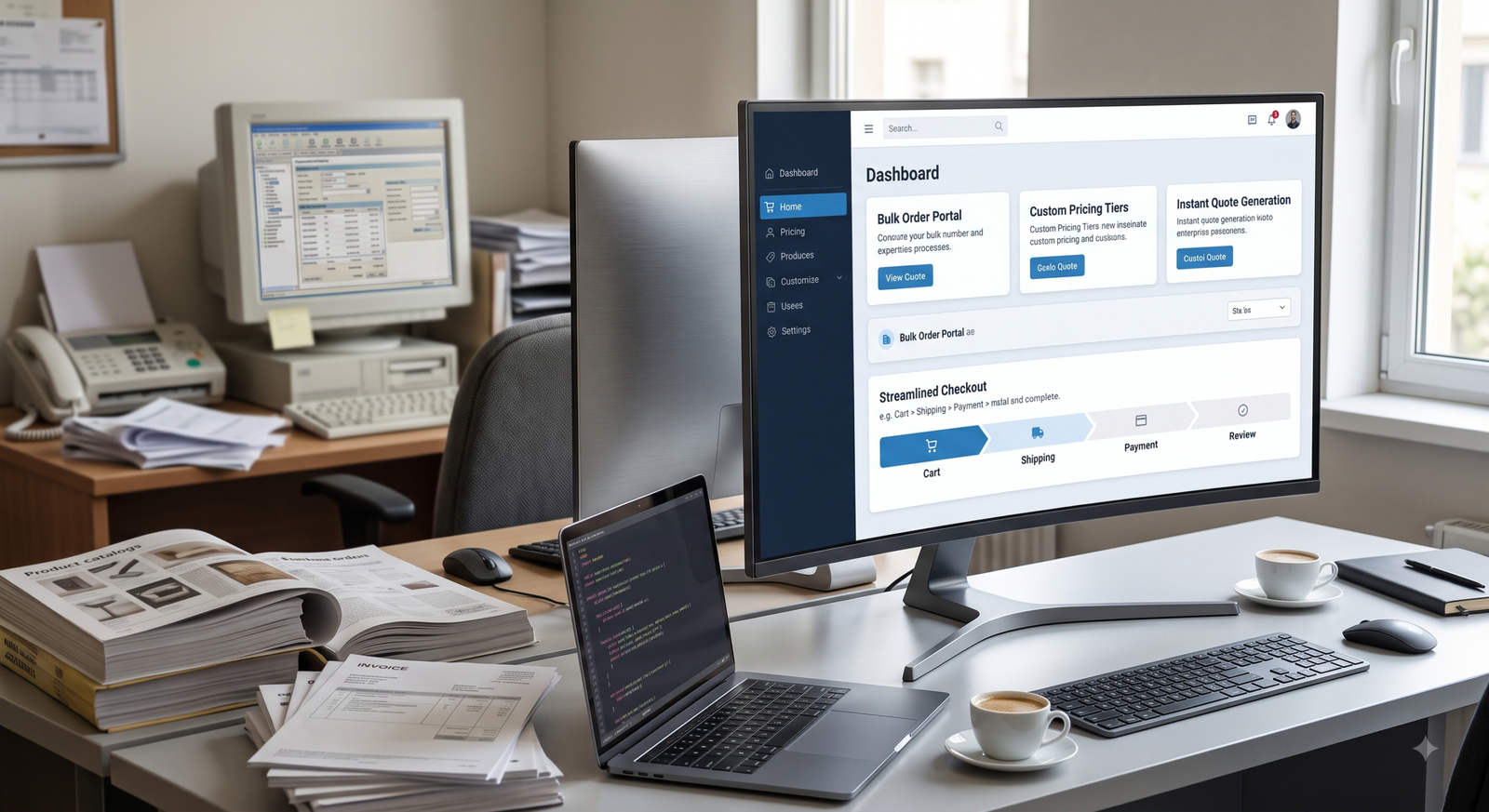
Welcome to this week’s edition of The Shift. Today, we are tearing down the biggest roadblock in digital wholesale and enterprise purchasing: checkout friction.
For years, B2B e-commerce lagged behind its B2C counterpart. Buyers were forced to endure multi-page PDF catalogs, cumbersome email chains, and archaic payment portals. But the modern B2B buyer expects a seamless, consumer-grade experience, even when ordering thousands of units, navigating complex pricing tiers, or securing enterprise software contracts.
Diagnosing Checkout Friction The most critical drop-off point in B2B transactions happens right at the conversion hurdle. Standard out-of-the-box shopping carts are rarely built for complex procurement. Whether dealing with a massive wholesale order or a multi-tiered software license, checkout pages frequently get bogged down by unnecessary fields and rigid structures.
Streamlining this often requires diving straight into the backend. By customizing the PHP environment, you can handle complex conditional logic, automate custom quote generation, or build tailored intake forms that capture essential lead data without causing user fatigue. When writing marketing copy for these landing page components, the headlines must be ruthlessly concise, and the form structure must respect the buyer’s time.
Elevating the B2B UI/UX Interface B2B portals no longer have an excuse to look like 1990s spreadsheets. Small, calculated design choices drastically impact digital marketing campaigns and overall conversion rates.
Implementing customized CSS for sticky headers ensures that the “Request Quote” or “View Cart” button remains persistently accessible as buyers scroll through dense technical specs, product overviews, or compliance whitepapers. Adding subtle shadow effects to primary digital assets and call-to-action buttons helps guide the user’s eye naturally through the purchasing journey, establishing a clean visual hierarchy that drives action without overwhelming the buyer.
Pushing WooCommerce to the Enterprise Level Managing platforms like WooCommerce at an enterprise scale requires moving beyond basic, off-the-shelf plugins. It demands rigorous technical troubleshooting to bypass standard B2C checkout limitations.
Scaling effectively means architecting solutions that seamlessly accommodate net-30 payment terms, dynamic bulk-tier pricing, and corporate role-based account management. When a WooCommerce checkout issue arises at this level, it’s rarely just a superficial glitch—it’s usually a deep-seated logic error that requires precise, immediate intervention to prevent thousands of dollars in abandoned carts.
A successful B2B e-commerce strategy doesn’t just bolt a shopping cart onto a website. It marries targeted marketing copy with robust, custom-coded infrastructure to make spending company money the easiest part of your client’s day.