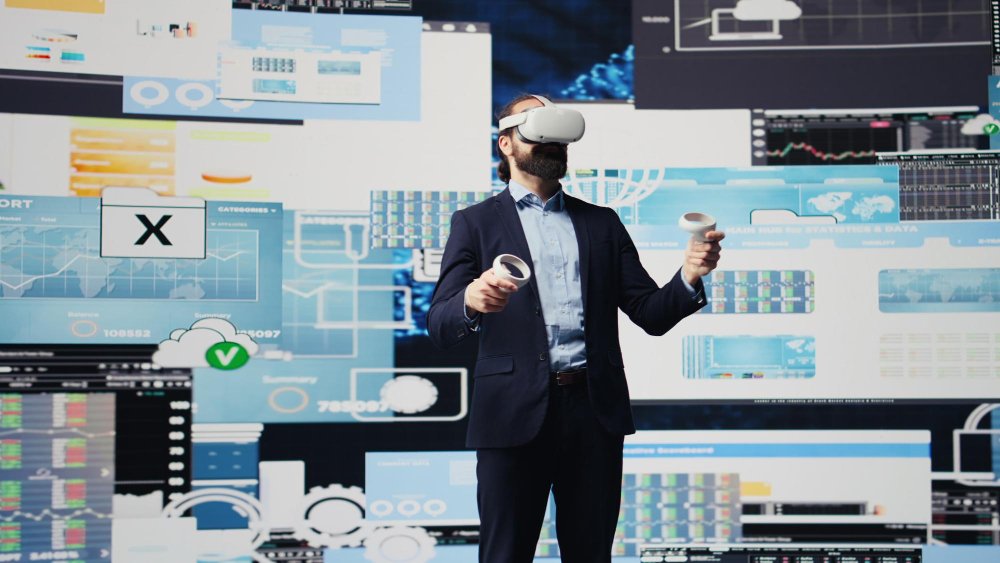
Spatial computing is rapidly emerging as one of the most transformative technologies for enterprise innovation. By combining augmented reality (AR), virtual reality (VR), artificial intelligence, and advanced sensors, spatial computing allows users to interact with digital information in three-dimensional environments. Businesses are beginning to explore practical applications that extend far beyond entertainment and gaming.
Manufacturing companies are using spatial computing to train employees on complex machinery without disrupting production lines. Engineers can visualise product designs in full scale before manufacturing begins, reducing development costs and accelerating innovation. In healthcare, medical professionals are adopting immersive technologies for surgical planning, medical training, and patient education.
Retailers are also leveraging spatial computing to create virtual showrooms where customers can explore products before making purchasing decisions. Real estate firms are offering interactive property tours, while architecture and construction companies are using digital models to improve project collaboration.
Cloud computing and 5G connectivity are supporting the adoption of spatial computing by enabling real-time data processing and collaboration across geographically distributed teams. Technology providers continue developing lightweight wearable devices that make enterprise deployment more practical and affordable.
Industry analysts expect spatial computing to become an important component of digital transformation strategies over the next decade. As hardware becomes more accessible and software capabilities expand, businesses across multiple industries are likely to discover new ways to improve productivity, collaboration, and customer engagement through immersive digital experiences.