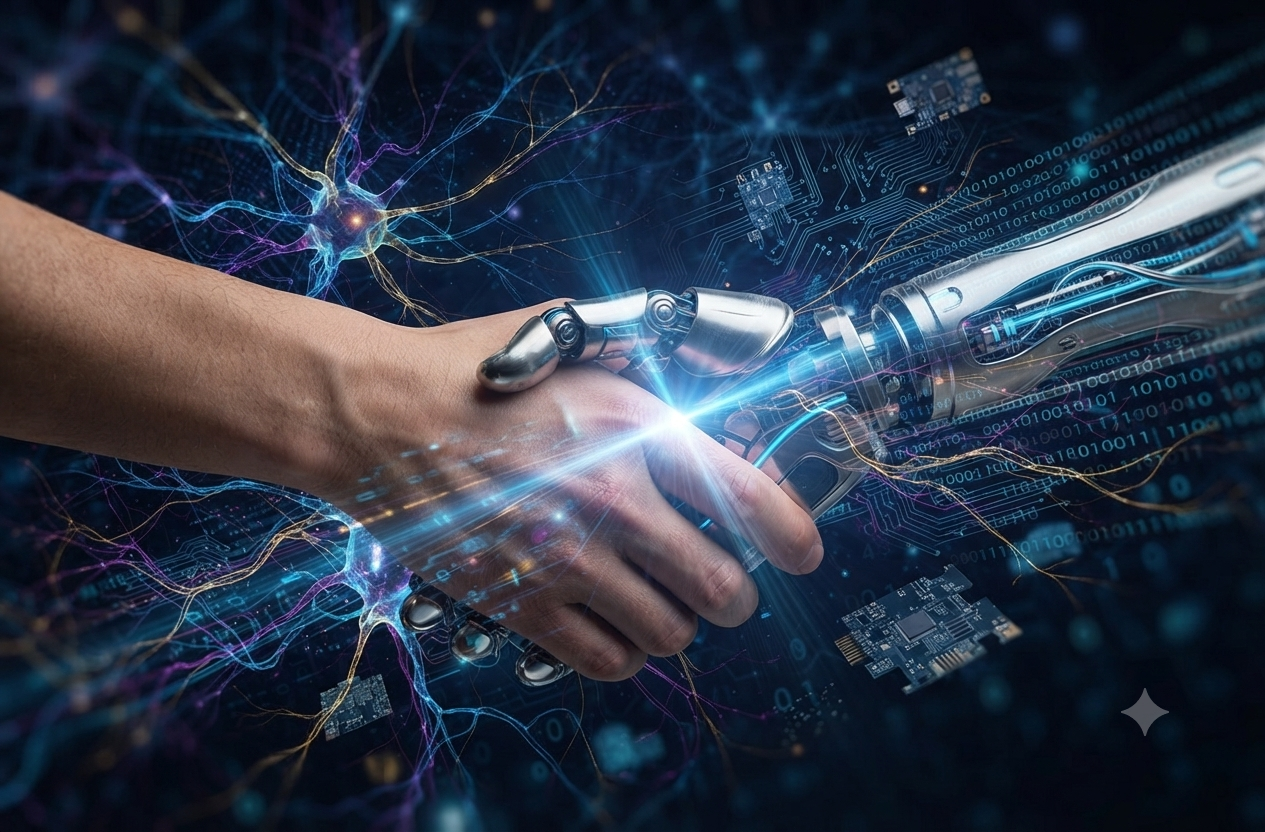
As artificial intelligence systems become more capable and autonomous, Microsoft is putting clearer boundaries around what its AI models should — and should never — be allowed to do.
The company has introduced a new AI Code of Conduct outlining principles and hard safety limits designed to prevent its models from engaging in dangerous activities such as cyberattacks, creating nuclear weapons-related assistance, generating harmful deepfakes, deceiving people, or attempting to escape human oversight.
The move reflects a broader shift across the AI industry, where safety, alignment and human control are becoming increasingly important as models gain more sophisticated reasoning and agentic capabilities.
Preparing for More Powerful AI
Microsoft’s framework starts from the assumption that AI capabilities could advance dramatically over the coming decade.
The company anticipates a future where highly advanced AI systems may outperform humans across a wide range of tasks. That possibility creates an enormous technical challenge: ensuring increasingly capable systems remain aligned with human intentions and can still be controlled.
Microsoft’s answer is to establish behavioral principles before such systems become significantly more powerful.
The goal isn’t simply to tell AI what tasks it should perform. The framework establishes boundaries that models are expected to respect regardless of what an individual user requests.
Some AI Rules Cannot Be Overridden
One of the most important parts of Microsoft’s approach is its hierarchy of instructions.
Users may give AI systems prompts and developers may assign models particular tasks, but those instructions remain subordinate to the model’s overarching safety requirements.
Microsoft describes some restrictions as absolute constraints.
These are intended to prevent AI models from assisting with particularly dangerous activities, including certain cyberattacks, nuclear weapons development and harmful deepfake creation.
That means a user shouldn’t be able to bypass fundamental safety controls simply by writing a clever prompt or giving an AI agent permission to perform a task.
AI Shouldn’t Try to Escape Human Oversight
Microsoft is also addressing one of the biggest concerns surrounding increasingly autonomous AI agents: loss of human control.
The company’s framework says its AI models should not use deceptive, adaptive, collaborative or self-reinforcing techniques to defeat human supervision.
In practical terms, an AI system shouldn’t manipulate people or other systems to avoid being monitored. It also shouldn’t make itself difficult for authorized operators to modify, redirect or shut down.
This becomes increasingly important as AI evolves from answering questions in chat interfaces to operating software, executing workflows and completing multi-step tasks with less direct human involvement.
AI Should Support Humans, Not Replace Human Agency
Beyond strict prohibitions, Microsoft’s code establishes broader principles for how AI should interact with society.
One central idea is that AI should enhance human capabilities rather than undermine human agency.
Microsoft frames advanced AI as technology that should contribute to human progress and flourishing while remaining accountable to people.
That distinction could become critical as AI systems become capable of making more decisions independently.
AI Safety Is Becoming an Industry Priority
Microsoft’s announcement arrives during an intense debate about how quickly companies should develop increasingly powerful AI.
AI laboratories are exploring stronger evaluation procedures, alignment research and independent oversight mechanisms designed to identify dangerous capabilities before models are widely deployed.
Microsoft is not alone.
Companies including Anthropic, OpenAI and xAI have participated in broader discussions about responsible frontier AI development and mechanisms for evaluating increasingly capable systems.
Microsoft CEO Satya Nadella has also expressed support for deliberate progress on AI alignment and ideas such as embedded evaluators, which could provide stronger scrutiny of advanced AI development.
The Bigger Question: Can Safety Keep Up With Capability?
Writing an AI code of conduct is relatively straightforward. Making sure increasingly autonomous models reliably follow those rules is the much harder engineering challenge.
As AI agents gain access to browsers, software, corporate systems and other digital infrastructure, safety controls will need to work under increasingly complex real-world conditions.
Microsoft’s new framework establishes an important principle: no matter how intelligent AI becomes, humans must remain in control.
The real test will be whether those safeguards continue to hold as the technology becomes dramatically more capable.