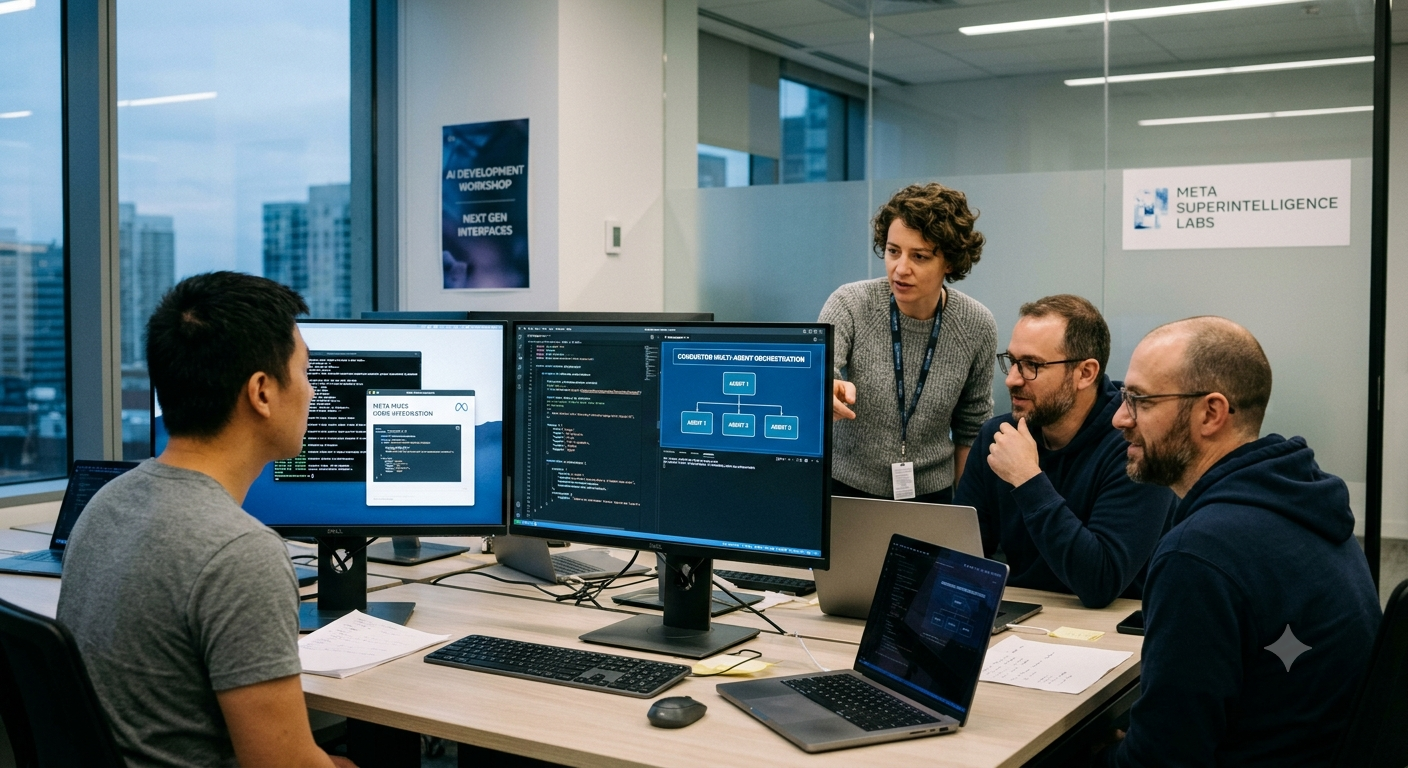
The acquisition strengthens Meta’s investment in AI-powered software development, bringing advanced multi-agent coding technology into its growing artificial intelligence ecosystem.
Meta is continuing to expand its artificial intelligence capabilities with the acquisition of Conductor, a startup developing AI-powered tools designed to simplify software development. The platform allows developers to coordinate multiple AI agents across separate workspaces, helping them manage different parts of a software project simultaneously.
The acquisition represents another step in Meta’s efforts to strengthen its position in the increasingly competitive AI development market. Although financial details of the agreement have not been disclosed, the move signals growing interest in technologies that can make software engineering faster and more collaborative.
Conductor Brings a New Approach to AI-Assisted Development
Founded in 2024, Conductor developed a platform that enables software engineers to deploy multiple AI agents to work on different tasks within a single project.
Rather than depending on one AI assistant to handle an entire development process, its system creates separate working environments where agents can tackle individual responsibilities in parallel.
These agents can operate through cloud infrastructure, local environments, or mobile devices. This approach allows developers to divide complex projects into smaller tasks while maintaining coordination across different development activities.
Another interesting aspect of Conductor’s technology is its use of AI models developed by established companies, including OpenAI and Anthropic, rather than relying exclusively on internally developed models.
The platform is designed to give developers greater flexibility in how they use AI assistance throughout their coding workflows.
Startup Founder Hints at New Developments Under Meta
Conductor founder and CEO Charlie Holtz announced the acquisition, describing the move as the beginning of a new chapter for the company.
He also suggested that the team is working on ambitious plans for the next generation of user interfaces, with a new experience expected to arrive in early 2027.
Holtz expressed enthusiasm about joining Meta’s AI organization and working alongside Alexandr Wang, Meta’s Chief AI Officer, and Nat Friedman, who leads product efforts at Meta Superintelligence Labs.
Although Meta confirmed the acquisition, the company has not shared additional information about the financial terms or how Conductor’s technology will be integrated into its existing products.
For now, Conductor’s main product features are expected to continue operating as before. However, its cloud service is scheduled to shut down on November 20, 2026. Following the closure, the company plans to begin deleting user data stored through that service.
Users relying on the cloud platform should therefore review the company’s announcement and make any necessary arrangements before the shutdown.
Meta Is Strengthening Its Position in AI Development
The acquisition comes during a period of increased investment in artificial intelligence across Meta’s business.
The company has been working to strengthen its AI capabilities after facing competition from established players in generative AI and developer-focused tools.
In August 2026, Meta introduced Muse Code, an AI coding agent designed to assist developers working with large codebases. The company has also expanded its Muse AI ecosystem, reporting that its service crossed 10 million downloads in the United States within 40 days of launch.
Beyond internal product development, Meta has pursued acquisitions to bring additional AI expertise and technology into its organization. Its earlier acquisition of Moltbook, an AI agent-focused social platform, also demonstrated its interest in emerging agent-based technologies.
Conductor adds another important capability to this growing portfolio, particularly in the area of AI-assisted software engineering.
Why Multi-Agent Coding Could Shape Software Development
AI coding tools are moving beyond simple code suggestions and automated troubleshooting. Increasingly, companies are exploring systems where multiple specialized agents can collaborate on different stages of software development.
This model could help engineering teams handle repetitive tasks, explore alternative solutions, identify issues, and accelerate complex development workflows.
For businesses, the potential benefits include improved developer productivity, faster project execution, and more efficient use of technical resources.
However, successful implementation will depend on how effectively these systems coordinate tasks, maintain code quality, and manage security across development environments.
The Bigger Picture
Meta’s acquisition of Conductor reflects a broader industry shift toward agent-driven artificial intelligence. As technology companies compete to build more capable AI ecosystems, acquiring specialized startups is becoming an important way to access new expertise and accelerate innovation.
The next major development will be how Meta combines Conductor’s multi-agent approach with its existing AI products.
If successfully integrated, the technology could contribute to a more advanced software development experience, where AI agents work alongside developers as coordinated digital collaborators rather than standalone assistants.