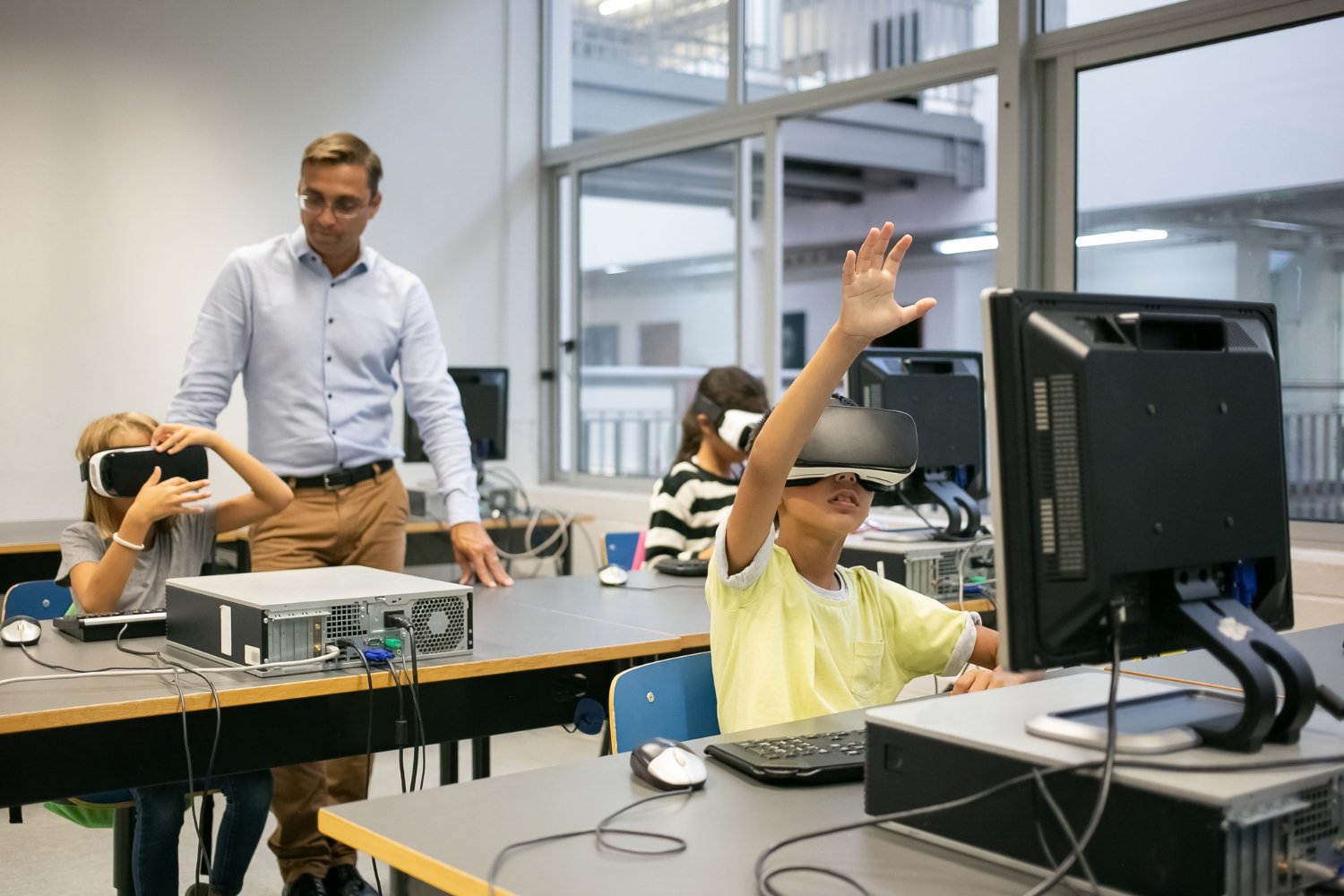
Artificial Intelligence has moved from science fiction to the front of every classroom conversation. In 2026, schools are no longer debating whether to use AI — they’re debating how, how fast, and who gets left behind. Educators, parents, and policymakers are caught in a swirling debate about AI-powered tutors, automated grading, personalized lesson plans, and the risk of students losing critical thinking skills altogether.
- AI tools like Khanmigo, Google’s Gemini for Education, and LLM-powered study assistants are already embedded in classrooms globally.
- Nearly all superintendents express excitement about AI’s potential — but the gap between excitement and implementation remains
- Core concerns include academic dishonesty, data privacy, algorithmic bias, and erosion of human mentorship.wide.
- Wealthier schools are adopting AI-first curricula while under-resourced districts struggle to afford a single licensed tool.
- The future of AI in education is not about the tools themselves, but how humans guide, monitor, and decide what those tools are worth.
In 2026, the most forward-thinking institutions are integrating AI as a co-teacher — not a replacement. They’re training educators in AI literacy, creating ethical AI use policies, and measuring AI’s actual impact on learning outcomes, not just access. For EdTech companies, curriculum publishers, and ed-policy think tanks, this moment represents both a massive opportunity and a significant responsibility. The institutions that win will be the ones that treat AI as infrastructure — embedded, intentional, and equitable.