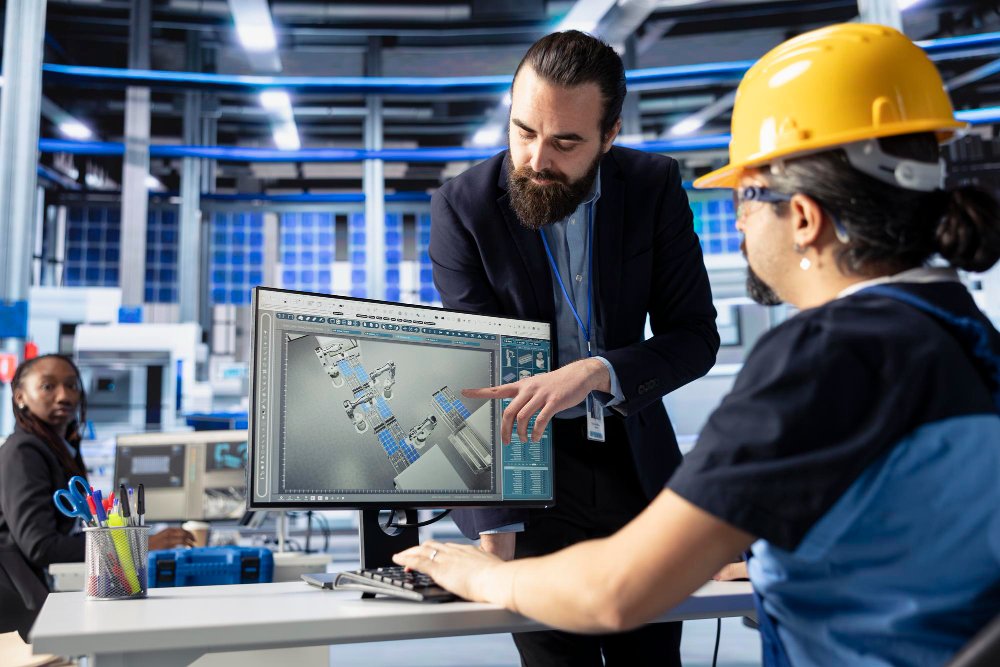
Digital twin technology is becoming a major focus for organisations looking to improve operational efficiency and reduce costs. A digital twin is a virtual representation of a physical object, process, or system that continuously receives real-time data from sensors and connected devices.
Manufacturing companies are using digital twins to monitor production lines, predict equipment failures, and optimise maintenance schedules before costly breakdowns occur. Smart cities are adopting similar technology to manage traffic, energy consumption, water systems, and public infrastructure more effectively.
The integration of artificial intelligence with digital twins is creating new opportunities for predictive analytics. Organisations can simulate different scenarios, identify potential issues, and make informed decisions without disrupting real-world operations.
Cloud computing and 5G connectivity are also accelerating adoption by allowing businesses to collect and analyse massive amounts of operational data in real time.
Industry experts believe digital twins will become a standard part of Industry 4.0 initiatives over the next decade, helping businesses improve productivity, sustainability, and customer satisfaction.